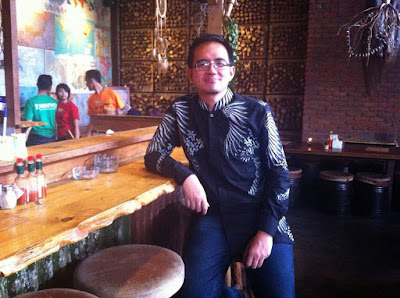
In the last months, I have been sharing thoughts back and forth with Muhamad Lukman, Chief Design Officer of Batik Fractal. I’m looking forward meeting him and learning more about the Batik Fractal software. But until then, a little interview:
Why is Batik important for you?
And how do you see the future of Batik, the future of the technique Batik Tulis and the philosophy; the language of the cloth, the meaning of the patterns/motifs and colours?
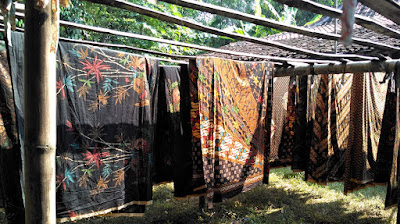
I think the importance of Batik lies in several aspect: in Heritage, Art, Economy and in a Scientific/ Technology aspect.
I believe that in the future Batik will have its own voice in the world. Nowadays you can see Batik on several catwalks, but this is not enough for me. In my opinion the world only sees parts and pieces of Batik. They see it as a nice textile, or just as a tradition. I see a future where people will recognize Batik instantly and will have a connection with the tradition.
I think in the future people will recognize Batik in a more complete way. How it touches the tradition & economy, how the patterns are made, how we see it in science and technology.
Because the process is so laborious, I would like people to know more, be interested, acknowledge this process and value it more.
For myself, I would like Batik to be promoted more prominently by our government. The future younger generations are getting interested in making Bati and want to be part of this. We need a thrive in economic aspect.
I also see a more sustainable future for Batik. In both economics as in waste management there is much to be improved.
I also see a future where technology could support us in terms of designing and preserving Batik.
Is Batik Fractal focussed on a specific Batik motif right now for a new collection or project?
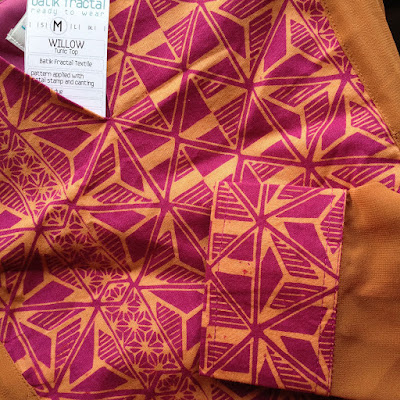
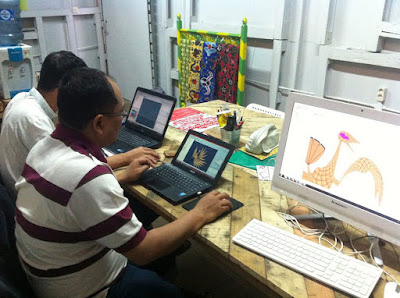
Batik Fractal is not focusing on specific motif right now. However, we have collected several Batik patterns that are part of the jBatik library. jBatik is desktop application that uses parametric systems to generate various batik patterns or any other patterns. The classical patterns form the base for us to develop various new patterns.
jBatik uses fractal theory, a branch of mathematic that deals with iterations, to create patterns.
Users can draw traditional Batik patterns and then create various new patterns by changing its parameters.
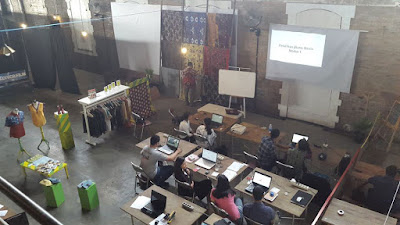
jBatik is being used to empower over a thousand traditional batik artisans in Indonesia. They can create various new patterns from their traditional ones.
#madewithjbatik is a special section (on our website) where we put the independently designed and produced batik fabrics by the batik artisans all across the country. These artisans are using jBatik Software to design the Batik and they produced it traditionally with handmade process (canting and stamp). With #madewithjbatik section, we provide them an online platform to display and commercialize their products through our website. These featured artisans have successfully utilizing technology on their traditional art.***
Do you consider what Batik Fractal is doing as Art or more as development?
For us, it is both. Batik Fractal is the next step of development in Batik making. Using technology to create new designs and storing them. It is also an art, since this new way of thinking, using technology to generate patterns, can create a distinct new way of creating Batiks.
Our aim is to be sustainable and fair with our artisan friends. We give transparent pricing for the collaboration and we explain to our costumer about our vendors and partners for Batik Fractal.
We are also working in collaboration with institutions such as schools and universities for jBatik trainings. And of course we are still designing our products.
What is your favorite Batik design?
For Batik design, I guess every traditional Batik designs is my favorite. It gives inspiration and can generate various new patterns.
* More about Batik Abimanyu on batikfractal.com
** More about Batik Kalinggo on batikfractal.com
*** Visit batikfractal.com/product-category/madewithjbatik/ for all #madewithjbatik products